
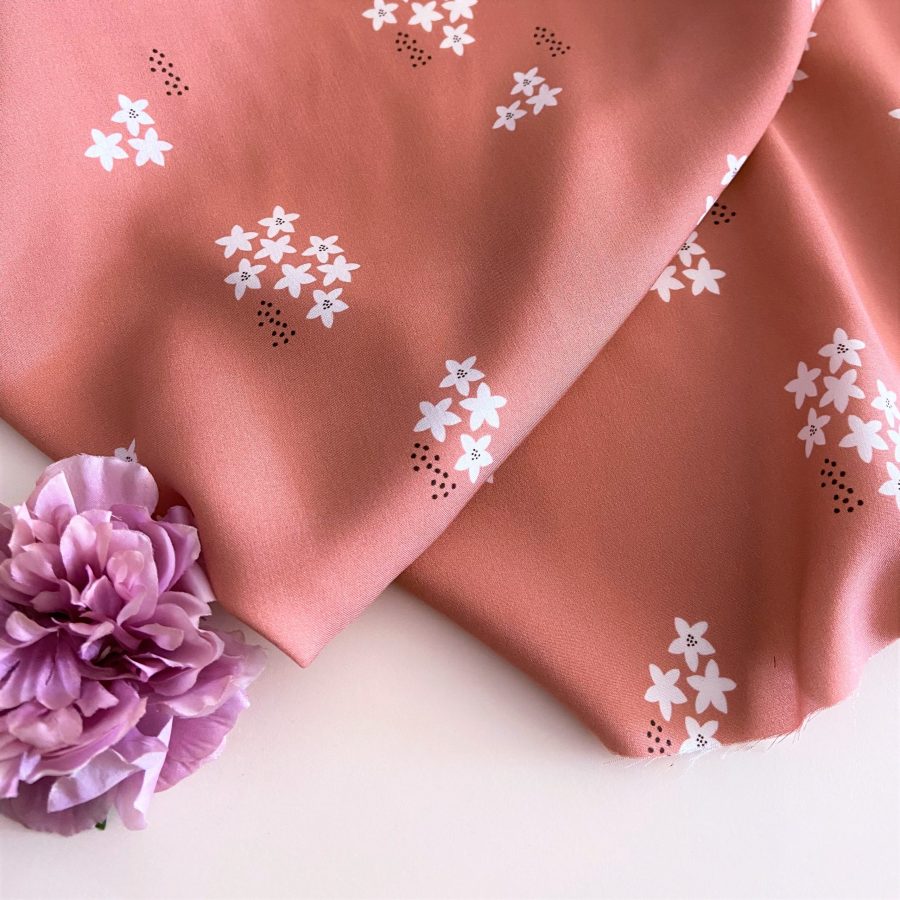
Here, we'll go over the basic principles for choosing fabric.
There are several categories of fabrics. In this article, we’ll discuss two major categories of fabrics; you’ll then need to choose the right fabric from each category for your sewing project, but first and foremost, it’s important to be familiar with these major categories.
This article is meant to be simple and accessible to beginners in sewing, which is why we won't go into detail here 🙂
Fabrics made of natural or synthetic fibers
The best-known ones are cotton, linen, silk, bamboo, and viscose (wood cellulose).
These so-called “natural” fabrics have the advantage of allowing your skin to breathe; they’re comfortable to wear in both summer and winter, and are suitable for sensitive skin.
They’re often easier to work with when sewing because they hold a crease well when ironed.
They’re very comfortable to wear and feel great against your skin.
The downside is that these fabrics wrinkle more easily. Note that a “crepe” weave will reduce this effect somewhat.
Good to know: These fabrics may bleed color during the first wash and may shrink by 2 to 7% during the first wash, depending on their composition and weave type.
Synthetic fabrics
The best-known ones are polyesters, microfibers, acrylics…
These fabrics are made primarily from hydrocarbons, starch, or petroleum.
They are completely synthetic and man-made.
The downside is that this type of fabric doesn't allow your skin to breathe, can cause allergic reactions if you have sensitive skin, and tends to make you sweat.
Furthermore, these fabrics are not eco-friendly and release polluting particles not only during manufacturing but also with every wash—and even into your skin every time you wear a garment.
But it’s not all bad news—after all, unfortunately, all manufacturing causes pollution!
The main advantage of these fabrics is that they don’t wrinkle at all. You don’t need to iron them, and they don’t shrink in the wash either. They last a long time (since plastic doesn’t decompose, unlike natural materials).
Another advantage: the colors you can achieve on these synthetic fabrics are more vibrant and don't fade.
So which is the best type of fabric?
It's impossible to answer that question! As you know, there's no such thing as the perfect fabric—it's all about compromise.
If it's important to you to avoid ironing and you're often on the go, then a wrinkle-resistant synthetic fabric is a good choice.
If, on the other hand, you prefer to let your skin breathe, have sensitive skin, or want greater comfort and a lower environmental impact, you’ll prefer natural or synthetic fibers….
What about the mixture?
There are, in fact, fabrics that combine natural and synthetic fibers. This allows you to enjoy the benefits of both types 😉
On our website, this is the case, for example, with our gabardine jackets, which we make a point of selecting in blended fabrics: natural fibers for comfort and gentleness on the skin, and synthetic fibers for their wrinkle resistance and durability.